
The roster does not break at 9am. It breaks on a Saturday night.
Emergency gaps arrive in one shape: unsocial hours, short notice, and a hole every person on the floor feels the same shift. The useful question is not how many doctors exist in Australia. It is how many hear about your vacancy before 6pm.
Four steps, and the order is the point.
Most departments start at step four and pay accordingly.
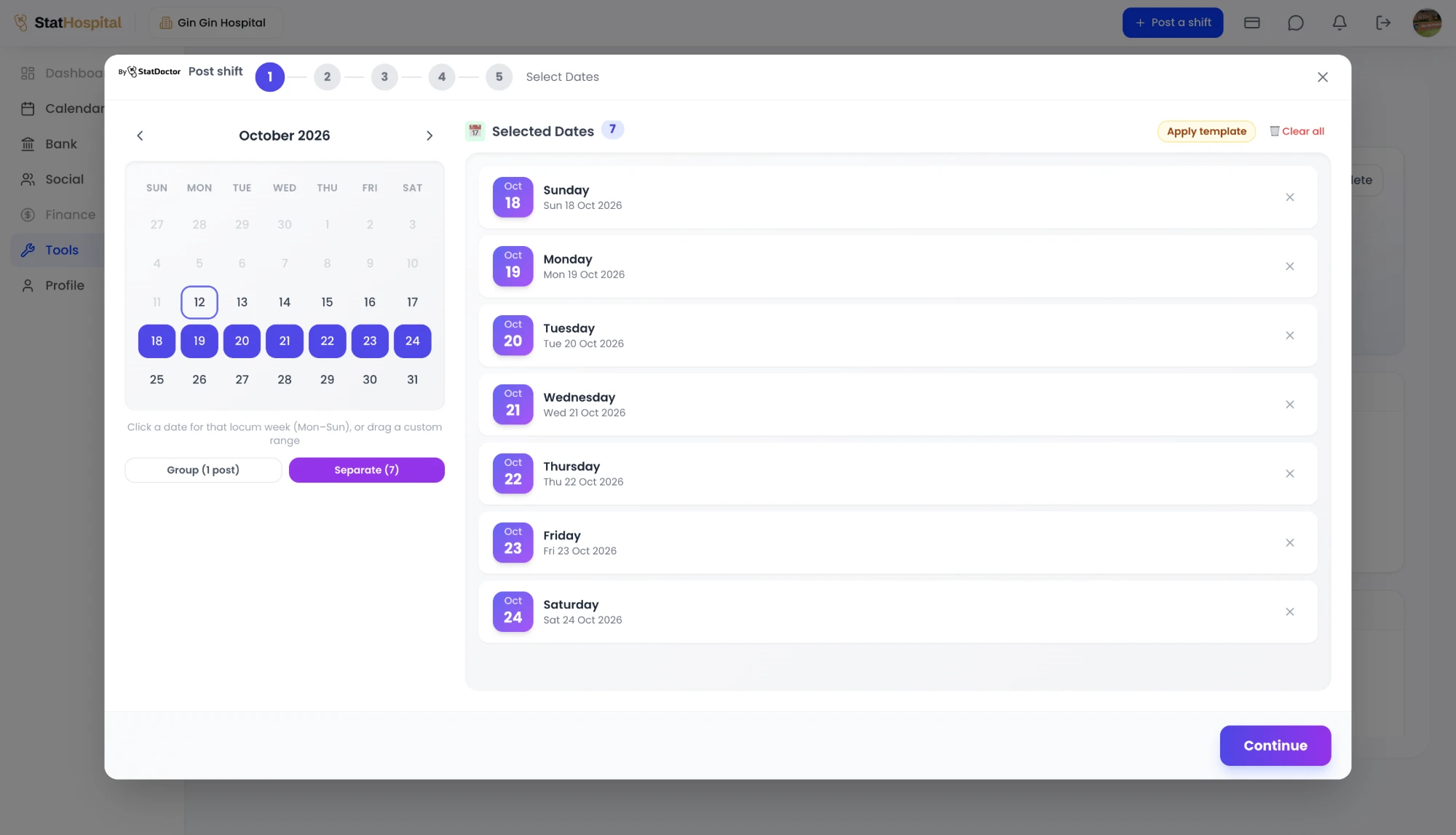
The vacancy leaves your roster on its own
A gap does not wait for someone to notice it and start ringing. When a shift opens it becomes a notification immediately, which is the only part of a 4pm Friday anyone can actually control. Your rostering system stays exactly where it is.
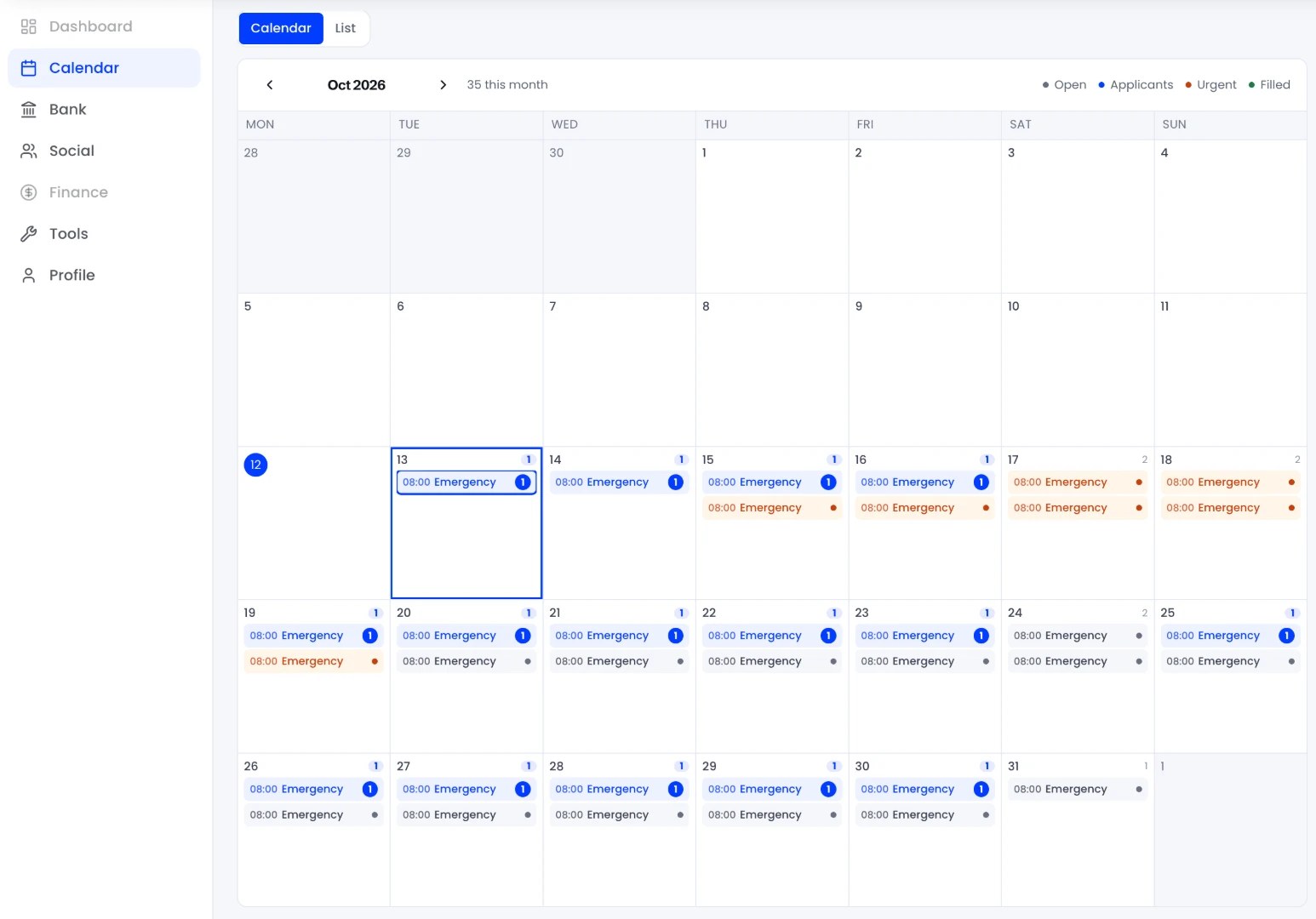
Stop texting and ringing down the list
What makes that take an hour is not the typing. It is that you do not know who is in town, who is post-nights, or who already said yes somewhere else. Doctors tell the platform what they want to hear about, and it tells them.
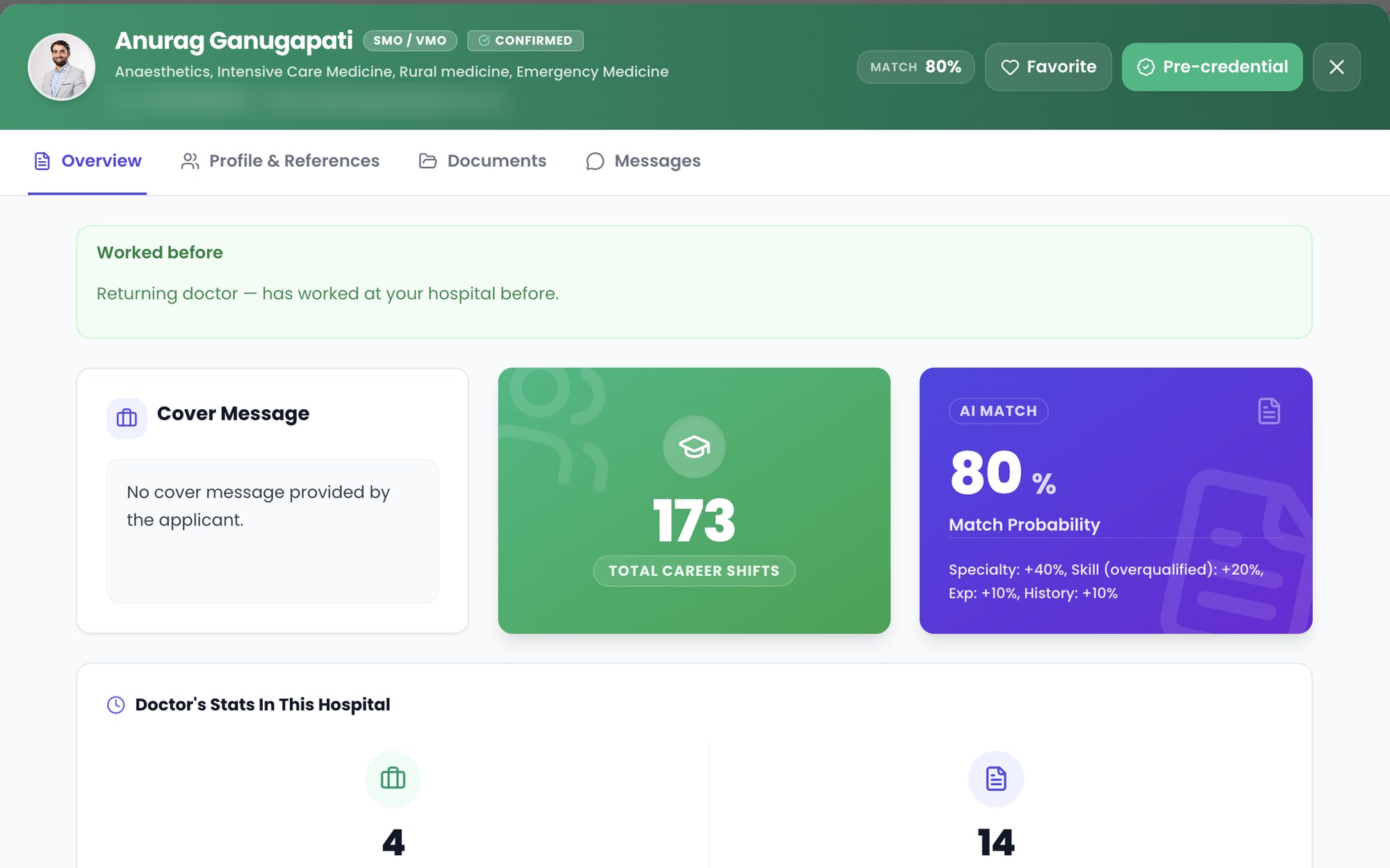
Then widen, and keep whoever answers
If your bank cannot cover it, the shift reaches credentialed doctors beyond it, and the ones who take it join your bank. The second time you need that night, you start from a longer list than the first.
What you are reaching into.
The same gap, with the clock attached.
The whole sequence is automated. Nobody has to be watching the roster at 4pm for it to run, which is the difference between a process and a person remembering.
- 1
4:02pm, the registrar calls in sick
The night shift opens on your roster and the chain starts itself. Nobody has to notice the gap, write a message or find the list: the vacancy is already out to the doctors who have told us they want ED nights in your region.
- 2
4:09pm, two replies from your own bank
Both have worked your department before. Both have current registration and indemnity on file, so there is no credentialing pack to chase. It was assembled before they applied.
- 3
4:40pm, nobody suitable, so it widens
The shift reaches credentialed doctors beyond your bank. Anyone who takes it joins it, so this Friday makes the next one easier rather than merely surviving itself.
- 4
Only now, an agency
For a genuinely bespoke search an agency is the right tool and we will say so. The difference is that it is the fourth call rather than the first, and the premium is paid only on the shifts that warrant it.
- 5
8:00am, workforce arrives to it already sorted
Every step above ran overnight without anyone driving it. Your medical workforce team starts the day with the shift filled, the doctor credentialed and the paperwork already attached, rather than with a list of people to ring before the morning handover.
Every doctor stays on your books.
A doctor found through the marketplace, or through an agency, does not leave with them. They stay on your bank with credentials current and reachable directly next time. That is the compounding part, and the part a placement fee can never give you.
Emergency staffing, answered.
How do hospitals fill emergency department shifts at short notice?
In four escalating steps, and the order is what saves the time. The vacancy is pushed from your roster the moment it opens; doctors on your own bank who want that kind of shift are notified automatically rather than rung one at a time; if it is still open it widens to credentialed doctors across the marketplace; and only then does a bespoke agency search make sense. Most departments start at the last step, which is why a Friday night gap costs what it does.
Why do emergency rosters fail on nights and weekends?
Because that is when the pool is smallest and the notice is shortest. Unsocial hours attract fewer applicants at any given rate, and a gap opening at 4pm on a Friday must be filled from whoever is both free and reachable that evening. Widening who sees the shift, and reaching them faster, is the lever that moves; approval chains are not what is costing you the fill.
What is a doctor bank for an emergency department?
Your own list of doctors who have worked, or are willing to work, in your ED. They keep their credentials current in one place, you contact them directly, and nobody sits between you. It is the difference between renting access to a doctor and keeping a relationship you already built.
Can StatHospital connect to our existing rostering system?
Yes, and that is the first step rather than an add-on. A vacancy on your roster becomes a notification to the right doctors without anyone noticing it and starting to make calls. Your roster stays your roster; we have never asked a department to replace one.
How quickly can an emergency shift be filled?
It depends on the hour, the location and the rate, and any supplier quoting a fixed time is guessing. What changes is how fast the right people hear about it: the shift leaves your roster and reaches interested doctors on your bank without a phone call, then widens if it has to. We would rather discuss your actual fill rate than quote an average.
Do you cover regional and rural emergency departments?
Yes, and that is where the shortage bites hardest. Regional cover depends on doctors willing to travel, which depends on notice, rate and how straightforward the trip is. We can widen and speed up who sees the shift. We cannot make a four-hour drive shorter, and a supplier implying otherwise has not worked regionally.
What happens to doctors we find through an agency?
They stay on your bank. A doctor found through a bespoke search does not leave with the agency: their credentials stay current and you reach them directly next time. You are paying to find someone once rather than to be reintroduced to them.
StatDoctor is free for doctors and takes no margin on the rate, so what you post is what they are paid. Health services pay for StatHospital; pricing follows the size of your bank. No charge for an initial conversation and no obligation after one.
Which shifts go unfilled most often?
Start there: the hours that keep failing, what you currently do about them, and what that costs. We will tell you plainly whether we can help.