
The gap is a budget line before it is a roster line.
An unfilled night in a public service is covered at an agency premium, from the same cost centre as everything else, and somebody has to account for it. A doctor bank is the alternative: your own list, contacted directly, at the rate you set, with no margin taken.
Three things, none of which change your governance.
Each links deeper rather than explaining itself here.
Start from the locums you already call
A public service does not have a handful of locums, it has hundreds of doctors it has already credentialed, rostered and paid, scattered across spreadsheets, inboxes and the memories of whoever has been there longest. All of them become your bank, with registration, indemnity and police check held and re-dated as they expire. Nothing is migrated and nothing is replaced.

Your award, paid whole
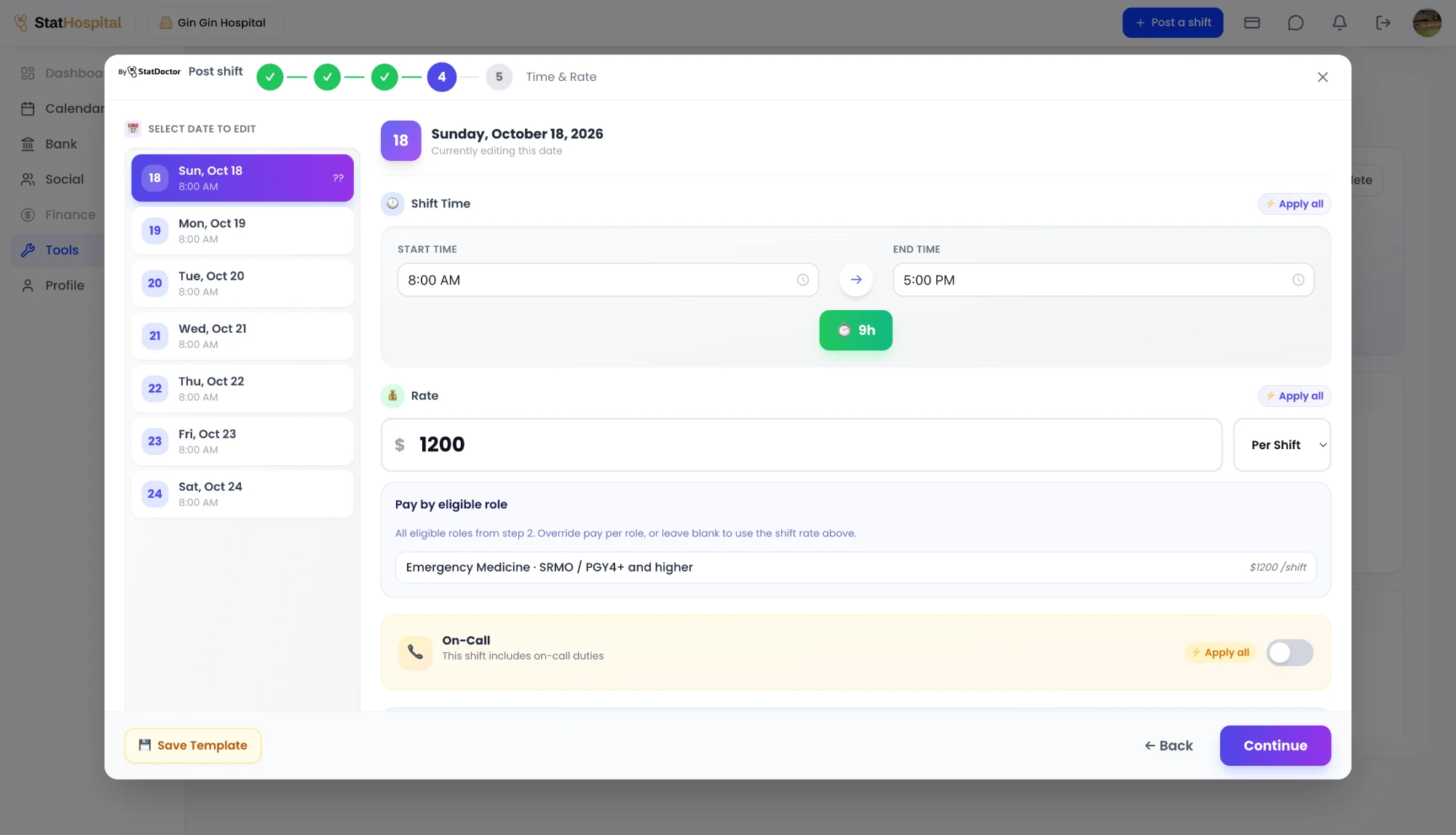
You set the rate at your determination. No margin is taken, so the figure leaving your cost centre is the figure reaching the doctor. That is the entire difference between this and an agency invoice.
Credentialing arrives assembled
Registration, indemnity, identity and police check held per doctor and re-checked as they approach expiry. Medical administration reviews a complete pack rather than chasing one, and the appointment stays with your delegate.
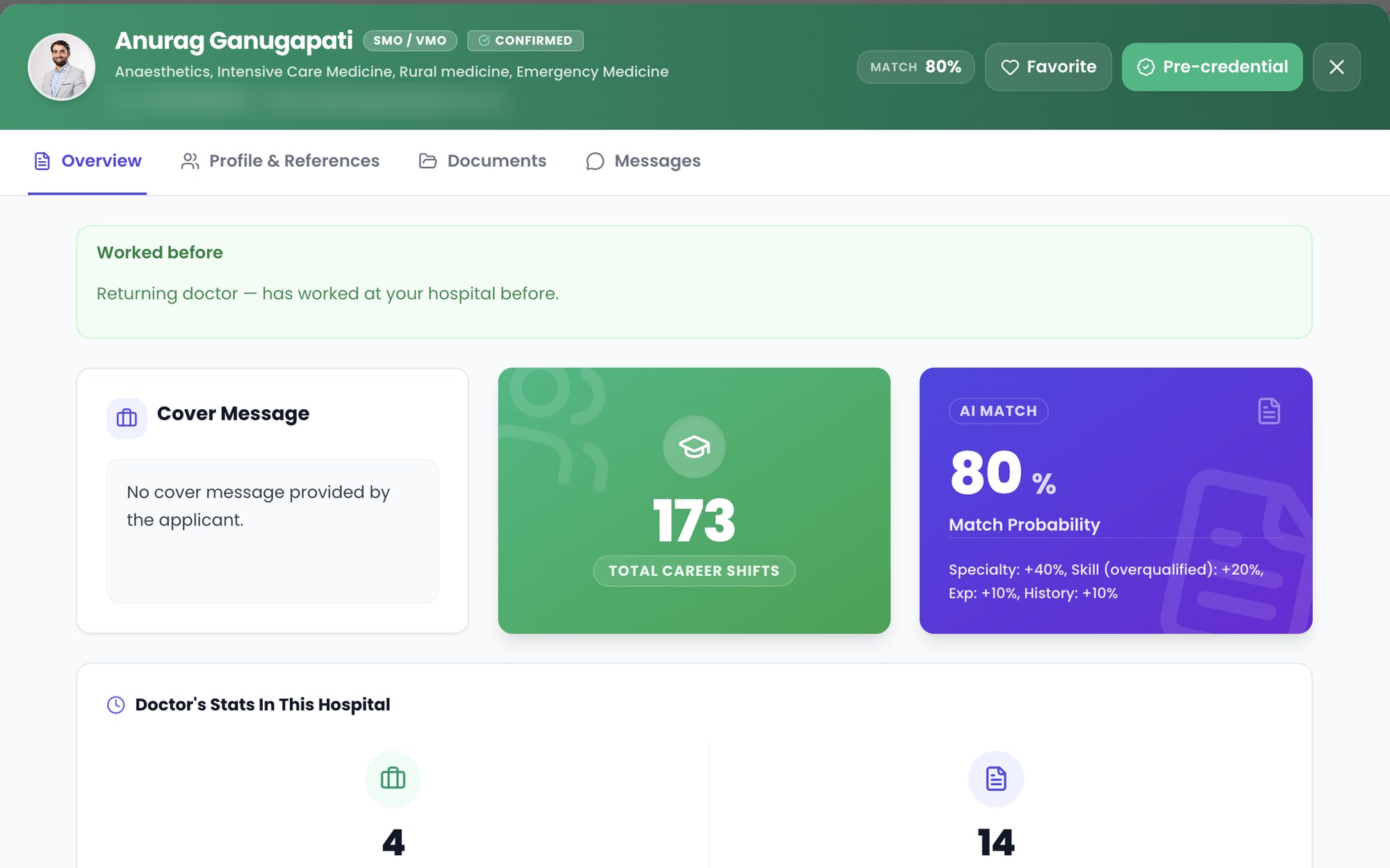
What you are reaching into.
What it looks like when it works.
- 1
The gap opens on your roster
It leaves for the doctors on your bank who want that kind of shift, without anyone noticing it first and starting to make calls.
- 2
Applications arrive credentialed
Registration and indemnity are already current and dated, so what reaches medical administration is a decision rather than a document chase.
- 3
The shift is paid at your rate
No margin, no premium, no invoice with a line item you have to explain. The cost centre sees the determination rate and nothing on top of it.
- 4
Agency spend becomes the exception
The number worth watching is the share of unsocial-hours cover filled directly. That is where a public service pays the most, and where a bank changes the most.
By-laws, delegations, rates and the appointment.
The platform holds evidence and carries messages. It does not appoint anyone, does not set a rate, and does not sit inside your credentialing committee. A supplier who offers to take those off your hands is offering something a public service cannot accept.
Public hospital staffing, answered.
How can a public hospital reduce locum agency costs?
By holding the relationship instead of renting it. An agency margin is the price of standing between a health service and a doctor it could contact directly; a doctor bank removes that intermediary for the doctors you already use. StatDoctor takes no margin on the rate, so the full posted rate reaches the doctor. What it cannot do is conjure a doctor who is not available, so expect the saving on shifts that would have filled anyway, not on the ones nobody wants.
Does StatHospital replace our credentialing process?
No, and it should not. Appointing a doctor to work in a public service is a governance decision made under your own by-laws and delegations. The platform holds the evidence: AHPRA registration, medical indemnity, identity and police check, re-checked as it expires, so the pack is complete and current when your medical administration reviews it. The decision stays where it legally sits.
Can we post shifts at our award or determination rate?
Yes. The rate on every shift is set by you, and most public services post at their award or determination rather than negotiating per shift. Because we take no margin, the rate you post is the rate the doctor sees and is paid. Nothing in the platform prices a shift for you or marks it up.
Are you on a state health purchasing panel?
Ask us about your jurisdiction rather than assuming either way, because the answer differs by state and changes. Where we are not on a panel, services have engaged us under their own delegated procurement thresholds. We would rather tell you what applies to you than claim a blanket approval we do not have.
What happens to the locums we already use?
They become the start of your bank. Most services begin with the doctors they already trust and would call first anyway. The platform gives that list somewhere to live with current documents attached, which is usually the first thing that stops being a spreadsheet.
How does this fit with our existing rostering system?
Alongside it. StatHospital is where open shifts are advertised, applications arrive and credentialing evidence lives. Your roster remains your roster. We have not asked a health service to replace a rostering system and would be sceptical of a vendor who did.
StatDoctor is free for doctors and takes no margin on the rate. Health services pay for StatHospital; pricing follows the size of your bank and which parts of the platform you use. No charge for an initial conversation and no obligation after one.
Start with last month's agency spend.
Which shifts went to an agency, at what premium, and at what hours. That conversation tells both of us quickly whether this is worth your time.