
One site's spare doctor is another site's gap.
A district is not short of relationships, it is short of ways for them to travel. A doctor credentialed and trusted at one hospital is invisible to the one forty minutes away, so both call an agency. A shared bank fixes the visibility without touching who decides.
Three things, and none of them centralise control.
Each links deeper rather than explaining itself here.
One site's relationship, available to the next
A doctor credentialed and trusted at one hospital is invisible to the one forty minutes away, so both call an agency. Holding the bank at network level makes that relationship visible without moving the rostering decision anywhere.

Rosters and rates stay with the service
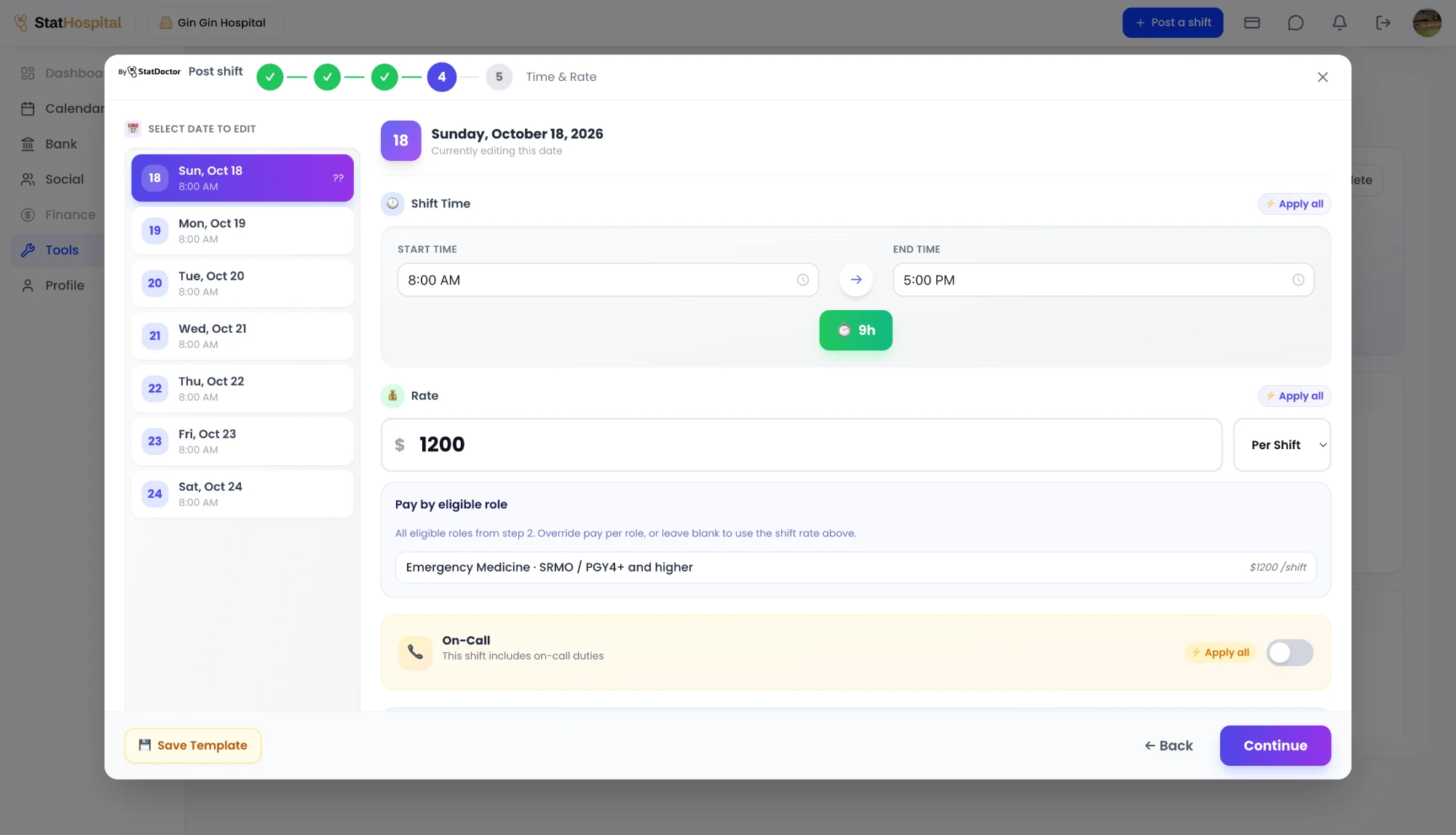
Each hospital posts its own shifts at its own rate under its own governance. What the district shares is who is available and credentialed, not who decides. A network where it worked the other way would not be adopted.
Assembled once, not once per hospital
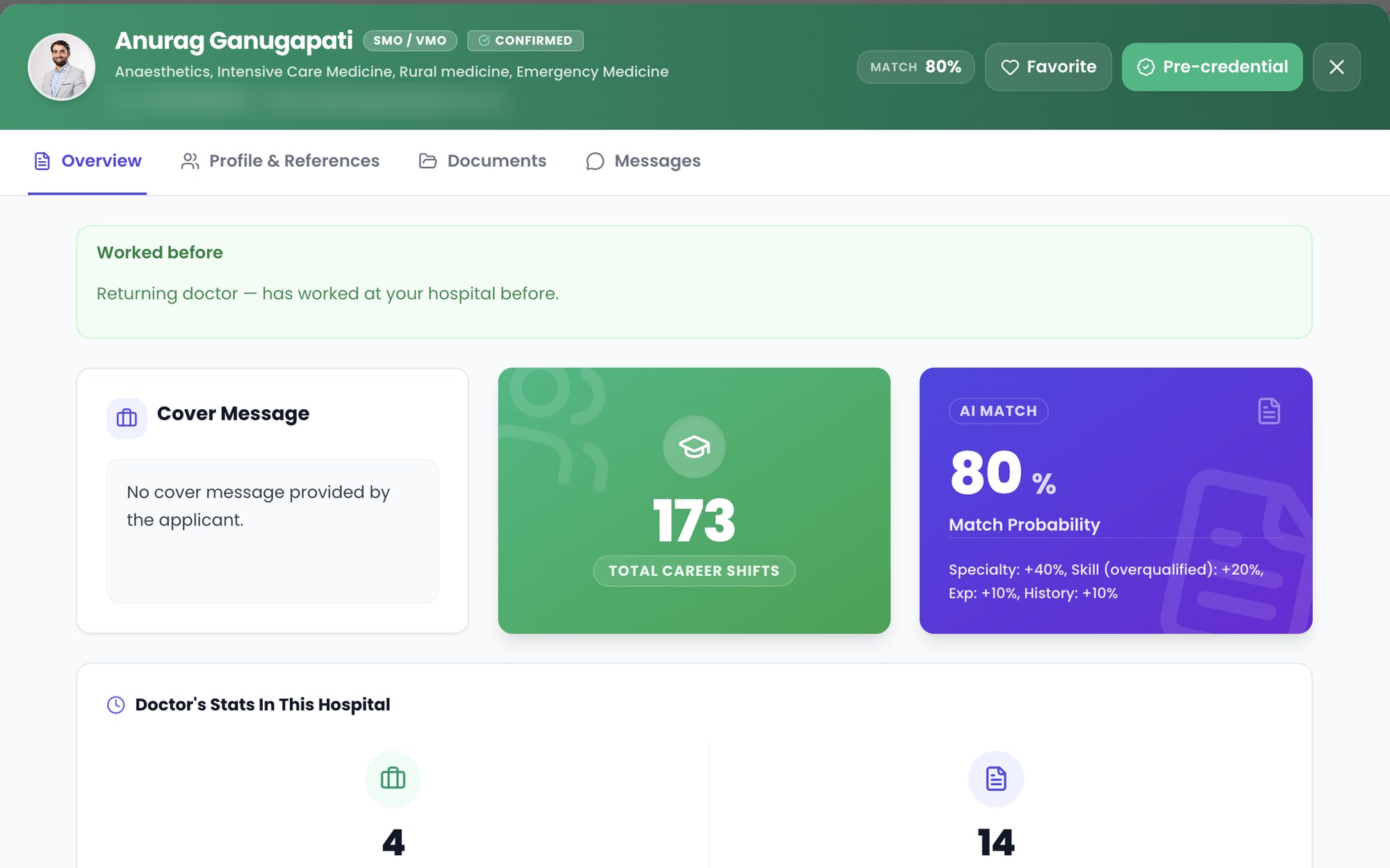
Registration, indemnity and identity held per doctor and re-dated as they expire, so a doctor moving between your sites does not restart the paperwork at each one.
What you are reaching into.
What it looks like when it works.
- 1
A gap opens at one of your services
It reaches doctors already credentialed anywhere in the district, not only the ones that hospital happens to know.
- 2
A doctor from the next town answers
They have worked your network before. Their credentials are current and were assembled once, not re-collected per site.
- 3
The service rosters them on its own terms
Local rate, local governance, local delegate. Nothing about sharing the bank moves that decision upward.
- 4
The district can finally see itself
Open shifts, applications and fill rate across the services you choose, a picture site-level rostering systems were never built to give you.
Rosters, rates and the appointment decision.
Sharing a bank is not centralising control. Each service continues to roster, set rates and appoint under its own delegations. What the network gains is sight of who is already credentialed somewhere inside it.
Network staffing, answered.
How do health networks share locum doctors across sites?
By holding the bank at network level while each site keeps its own rosters and rates. The common failure is not that doctors are unwilling to work a second site, it is that nobody at site B knows site A already credentialed and trusts them. A shared bank makes that relationship visible without taking the rostering decision away from either site.
Does a network-wide bank override local site autonomy?
No, and a network where it did would not be adopted. Each service keeps its own rosters, its own rates and its own governance. What is shared is visibility of who is credentialed and reachable. Sites that want to operate independently continue to; the ones that want to borrow from a neighbour now can.
How does this work with district-level credentialing?
The platform holds registration, indemnity, identity and police-check evidence and re-checks it as it expires. Where a district credentials centrally, that pack serves every site in it rather than being rebuilt per hospital. Where credentialing is local, the evidence still arrives assembled. The appointment decision remains with whoever holds the delegation.
Can we see staffing across all our services in one place?
Yes. Open shifts, applications and fill rate across the sites you select. That cross-site view is usually the first thing a network notices it has never had, because site-level rostering systems were not built to be read together.
What is the first thing a network should measure?
How often one site fills a gap with a doctor already known to another site in the same network. That number is close to zero in most districts before a shared bank exists, and it is the clearest signal that the network is operating as a network rather than as a group of hospitals under one letterhead.
Do we have to replace our rostering systems?
No. StatHospital is where shifts are advertised, applications arrive and credentialing evidence lives. Your rosters stay where they are. We have never asked a district to rip out rostering and would be sceptical of a vendor who did.
StatDoctor is free for doctors and takes no margin on the rate. Networks pay for StatHospital; pricing follows how many services and which parts of the platform you use. No charge for an initial conversation and no obligation after one.
How often do your sites share a doctor?
If the honest answer is almost never, that is the number worth starting from. Tell us how your services currently recruit and cover, and we will say whether we can change it.