
An uncovered list is a cancelled list.
Private staffing gaps have a number attached. A theatre session without an anaesthetist does not run, the revenue goes with it, and the surgeon remembers. The cover worth building is procedural, on-call, and the VMO relationships behind both.
Three things, and none of them touch your by-laws.
Each links deeper rather than explaining itself here.
Build the bank before the cancellation
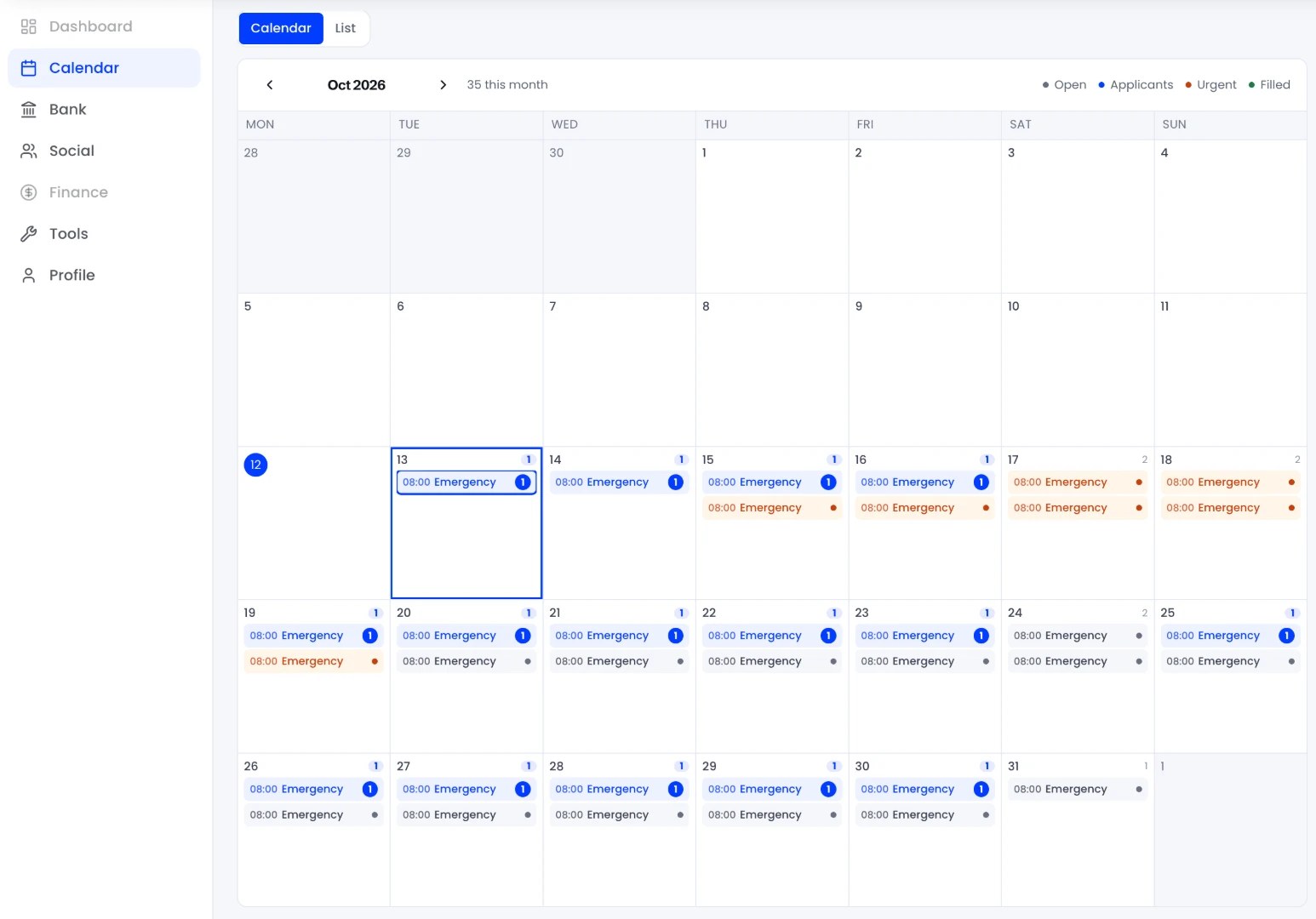
Anaesthetists and proceduralists are the narrowest pool and the slowest to find cold. A standing list of doctors already credentialed at your hospital is the only version of this that helps on a Friday afternoon, because a bank built after a cancelled list does not uncancel it.
Committee-ready, not committee-chased
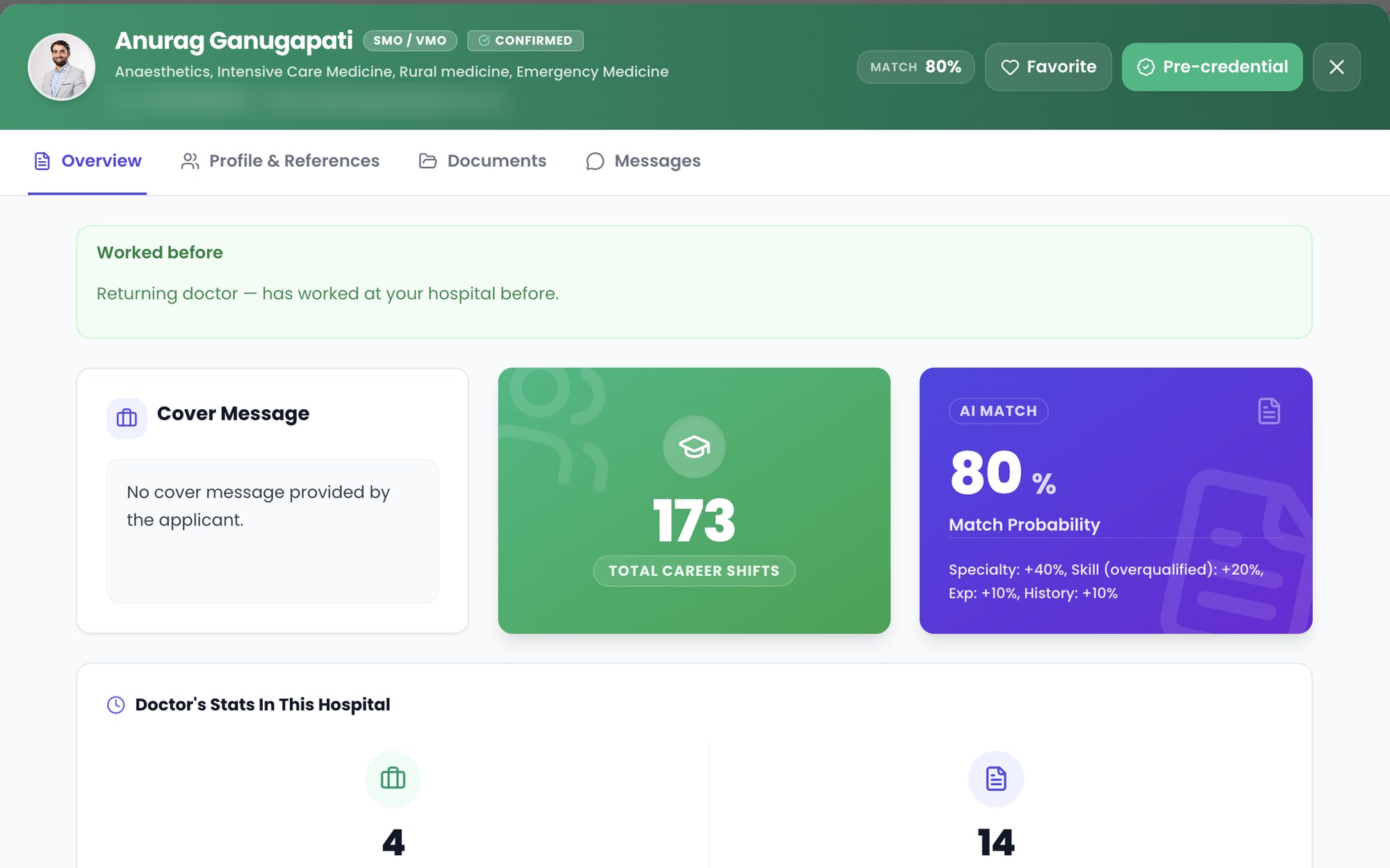
Registration, indemnity, identity and scope evidence held per doctor and re-dated as they expire, so what reaches your medical advisory committee is a complete pack. The appointment remains the committee's decision under your by-laws.
Negotiated, and paid whole
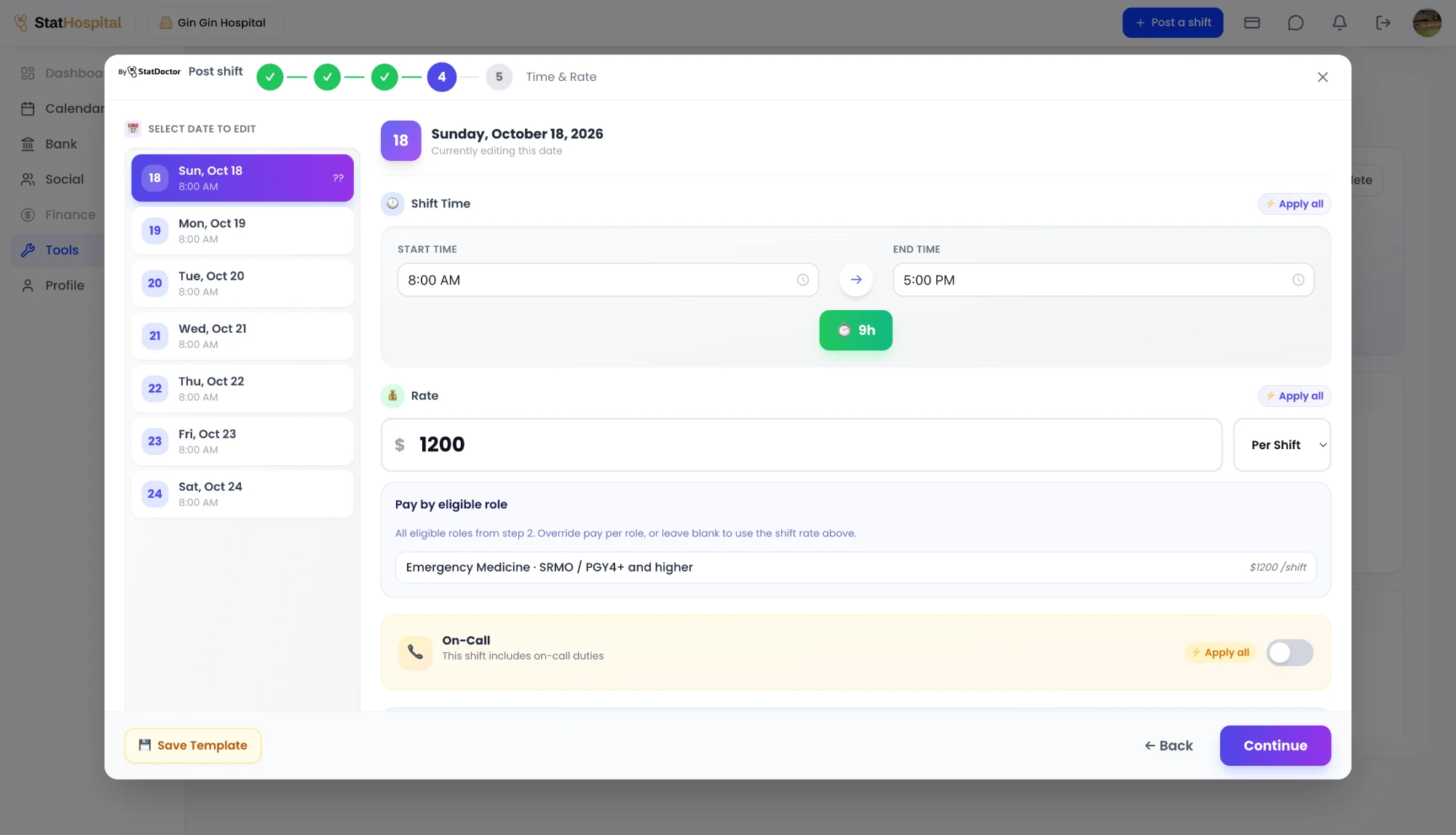
You set the rate per shift or appointment and no margin is taken, so what you negotiate is what the doctor receives. That is what makes rate a credible lever when a list genuinely has to run.
What you are reaching into.
What it looks like when it works.
- 1
Thursday, the anaesthetist withdraws
Friday's list is suddenly unstaffed. The session goes to the doctors on your bank who hold the right scope and have worked your theatres before.
- 2
Credentials are already current
Nobody is chasing an indemnity certificate that expired in April, because expiry dates are held and the pack was re-checked before it was needed.
- 3
The rate is yours to move
If the list must run, you can price it accordingly and the whole of that reaches the doctor. There is no margin diluting the one lever you have.
- 4
The list runs, and they stay on your bank
The doctor who covered Friday is reachable for the next one, which is the part an introduction fee cannot give you.
Credentialing, scope and the terms of engagement.
Appointment and scope of practice remain decisions for your medical advisory committee. We are not a party to the engagement and take no margin on the rate. What changes is that the paperwork is current when the committee sees it.
Private hospital staffing, answered.
How do private hospitals cover theatre lists at short notice?
With a standing bank of VMOs and proceduralists who are already credentialed at the hospital, contacted directly. Procedural cover is the hardest category to fill at short notice because the pool is narrow and the work is specific, which is exactly why the list has to exist before the gap does. A bank built after a cancellation does not help with that cancellation.
Does this work when our doctors are VMOs rather than employees?
Yes, and that is the common case in private. The platform holds the relationship and the credentialing evidence; the engagement terms stay between the hospital and the doctor, as they already are. StatDoctor does not employ doctors, does not sit in the contract and takes no margin on the rate.
How does StatHospital sit with our medical advisory committee?
Unchanged. Appointment and scope of practice remain MAC decisions under your by-laws. What changes is what arrives at the committee: a complete, current credentialing pack rather than a chase for documents that expired between the application and the meeting.
Can we negotiate rates individually with each doctor?
Yes. Rates are set by you per shift or per appointment, and because no margin is taken, a negotiated rate reaches the doctor whole. That is the substantive difference from an agency model, which prices the gap rather than the work and keeps the difference.
What does an uncovered theatre list actually cost?
More than the session. A cancelled list is lost theatre revenue, rebooked patients, and a surgeon who remembers which hospital could not staff their day. That is why procedural cover justifies a standing bank where a ward night might not: the cost of going short is immediate and attributable.
Do you also recruit permanently?
Yes, and you are not routed through a locum placement first to get there. When a gap turns out to be a vacancy, our team runs the recruitment directly. Most private hospitals come to us with one of those two problems and discover the other.
StatDoctor is free for doctors and takes no margin on the rate. Hospitals pay for StatHospital; pricing follows the size of your bank and which parts of the platform you use. No charge for an initial conversation and no obligation after one.
Which lists have been cancelled this quarter?
Start there: the sessions that did not run, why, and what they were worth. We will tell you plainly whether this is a problem we can help with.